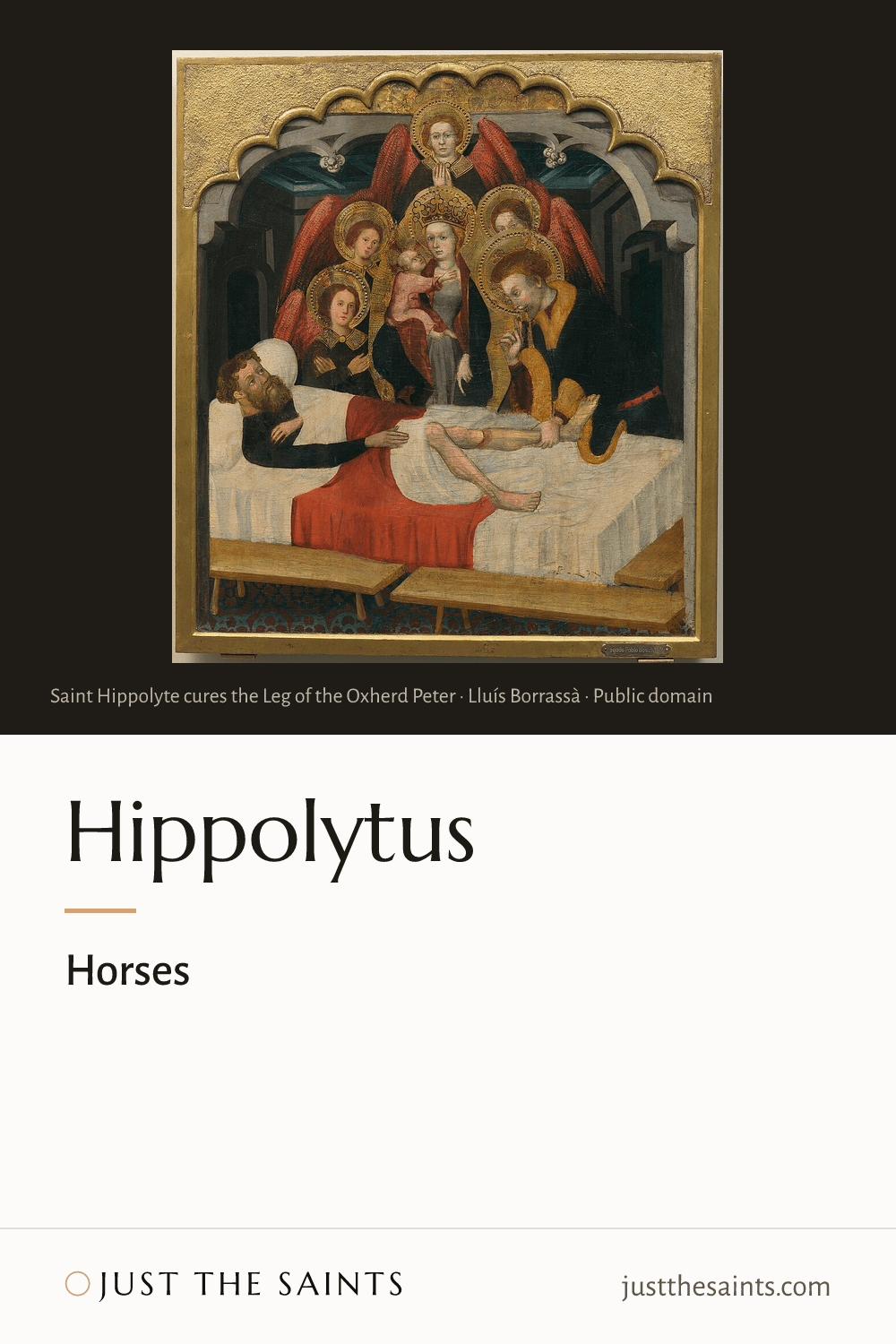
Hippolytus
Updated
In our own words
Hippolytus was a presbyter of the Church of Rome at the beginning of the third century. When Callistus was elected pope, he left the communion of the Roman Church and had himself elected antipope. He was banished to Sardinia with Bishop Pontianus and, shortly before or soon afterward, became reconciled with the Church of Rome. After both had died on Sardinia, their remains were brought back to Rome on 13 August, either 236 or one of the following years, and he was buried on the Via Tiburtina. Both were revered as martyrs by the Roman Church. He was the most important theologian of the Roman Church in the pre-Constantinian era.
Hippolytus , Saints , Martyrs.—I.
Patronages
According to Catholic tradition, as recorded in the sources cited for each patronage:
Horses
and in it horses were blessed at the high altar with an incredible concourse, this saint being honoured as patron of horsemen.
Recorded as patron of horses in:
- Butler, Lives of the Saints, 1812, ST. HIPPOLYTUS, M.
- Drake, Saints and Their Emblems, 1916, PATRON SAINTS OF
Also recorded as patron:
Feast day
- August 13 · General Roman Calendar
From Catholic Encyclopedia, 1913, “Sts. Hippolytus”
St. Hippolytus of Rome , presbyter and antipope;
date of birth unknown;
d. about 236.
Until the publication in 1851 of the recently discovered "Philosophumena", it was impossible to obtain any definite authentic facts concerning Hippolytus of Rome and his life from the conflicting statements about him, as follows: Eusebius says that he was bishop of a church somewhere and enumerates several of his writings (Hist. eccl., VI, xx, 22).
St. Jerome likewise describes him as the bishop of an unknown see, gives a longer list of his writings, and says of one of his homilies that he delivered it in the presence of Origen, to whom he made direct reference (De viris illustribus, cap. 1xi).
The Chronography of 354, in the list of popes, mentions Bishop Pontianus and the presbyter Hippolytus as being banished to the island of Sardinia in the year 235;
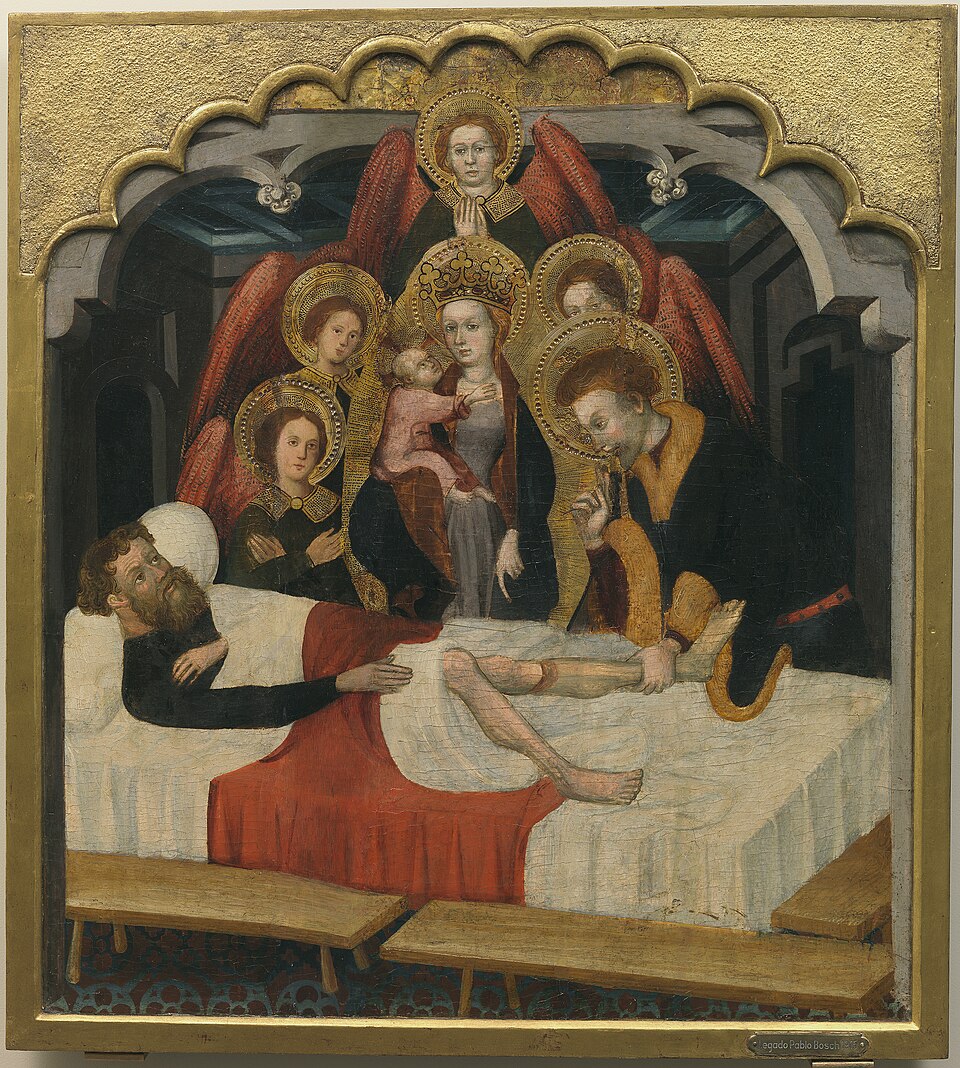
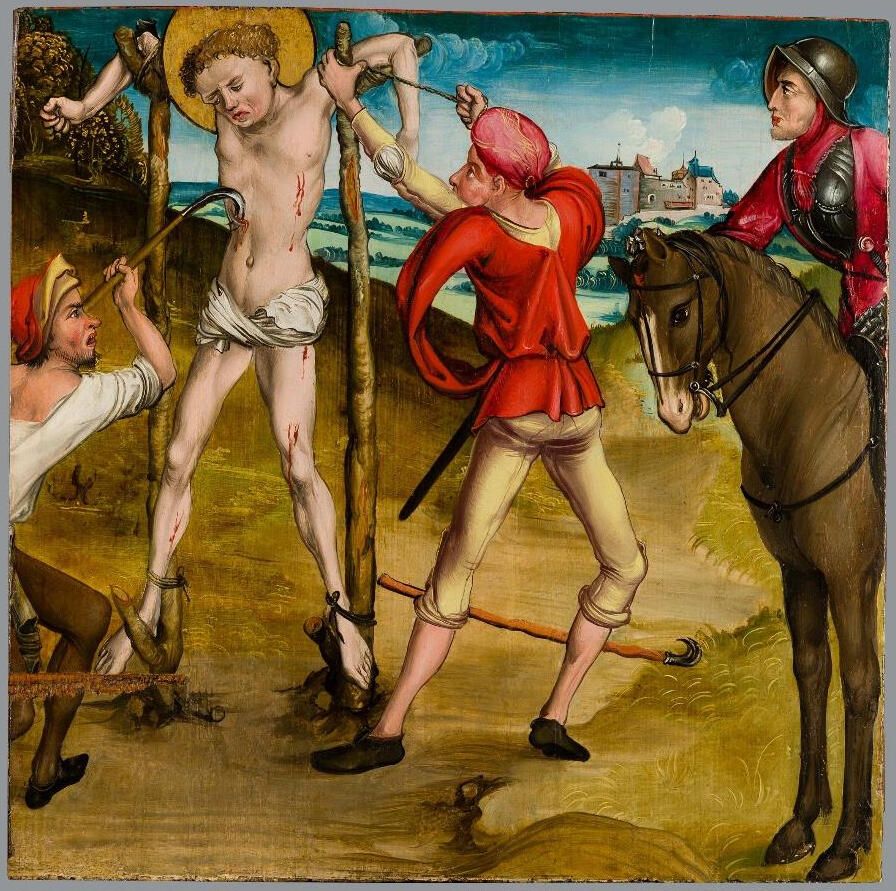
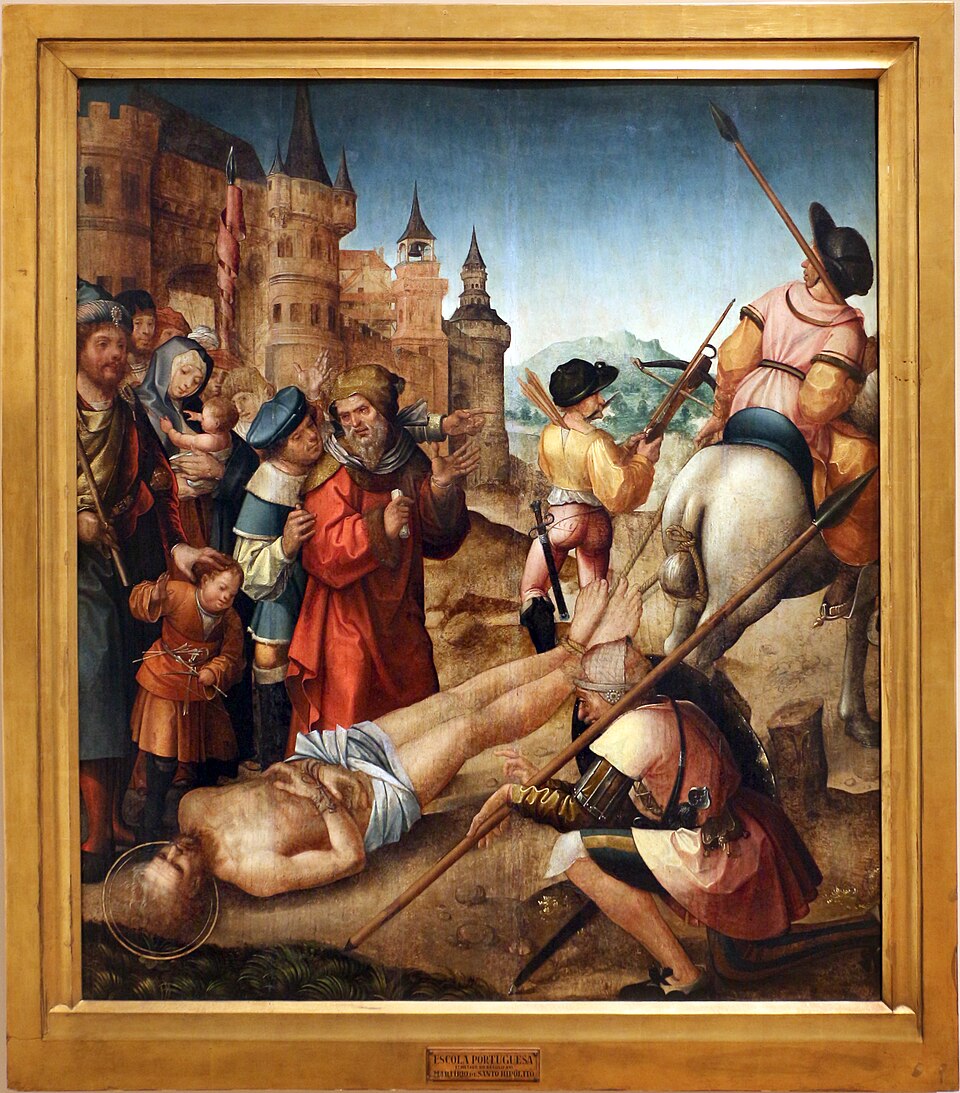
Works of art

Share this page