Saint Sebastian
Updated
In our own words
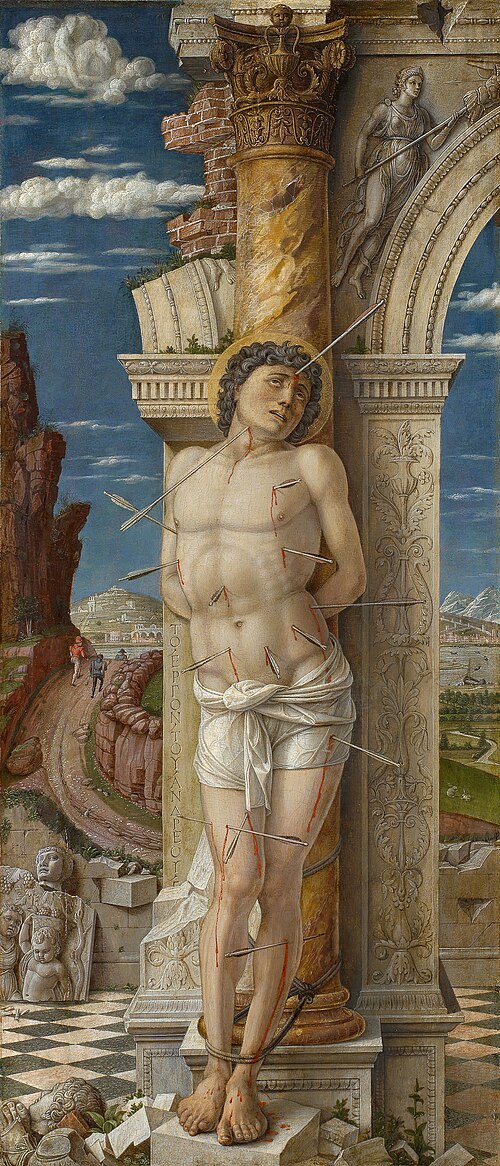
The chronologer of 354 records that Sebastian was buried on the Via Appia. St. Ambrose states that he came from Milan and was venerated there even in Ambrose's own time. Acts probably written at the beginning of the fifth century relate that he was an officer in the imperial bodyguard and was discovered to be a Christian in 286; the Catholic Encyclopedia holds these stories unhistorical. In 367 a basilica, one of the seven chief churches of Rome, was built over his grave. The earliest mosaic of him, probably from 682, shows a bearded man with no arrow; Renaissance art first portrayed him as a youth pierced by arrows.
Roman martyr;
Patronages
According to Catholic tradition, as recorded in the sources cited for each patronage:
Archers
That St Sebastian was the chosen patron of archers, and of soldiers in general, no doubt followed naturally from the legend.
Recorded as patron of archers in:
- Butler, Lives of the Saints, 1926, ST SEBASTIAN, Mart.
- Drake, Saints and Their Emblems, 1916, PATRONS OF ARTS, TRADES AND PROFESSIONS
- Baring-Gould, The Lives of the Saints, 1897, S. SEBASTIAN, M., AT ROME.
Chiemsee
Patron of Chiemsee, Mannheim, Oetting, Palma, Rome, Soissons ;
Recorded as patron of Chiemsee in:
- Baring-Gould, The Lives of the Saints, 1897, S. SEBASTIAN, M., AT ROME.
Lacemakers
Recorded as patron of lacemakers in:
- Drake, Saints and Their Emblems, 1916, PATRONS OF ARTS, TRADES AND PROFESSIONS
Makers of fencing foils
Recorded as patron of makers of fencing foils in:
- Baring-Gould, The Lives of the Saints, 1897, S. SEBASTIAN, M., AT ROME.
Makers of military laces
Recorded as patron of makers of military laces in:
- Baring-Gould, The Lives of the Saints, 1897, S. SEBASTIAN, M., AT ROME.
Mannheim
Patron of Chiemsee, Mannheim, Oetting, Palma, Rome, Soissons ;
Recorded as patron of Mannheim in:
- Baring-Gould, The Lives of the Saints, 1897, S. SEBASTIAN, M., AT ROME.
Oetting
Patron of Chiemsee, Mannheim, Oetting, Palma, Rome, Soissons ;
Recorded as patron of Oetting in:
- Baring-Gould, The Lives of the Saints, 1897, S. SEBASTIAN, M., AT ROME.
Ottingen
Recorded as patron of Ottingen in:
- Husenbeth, Emblems of Saints, 1882, PATRONS OF COUNTRIES AND CITIES.
Palma
Patron of Chiemsee, Mannheim, Oetting, Palma, Rome, Soissons ;
Recorded as patron of Palma in:
- Baring-Gould, The Lives of the Saints, 1897, S. SEBASTIAN, M., AT ROME.
Pestilence
Recorded as patron of pestilence in:
- Drake, Saints and Their Emblems, 1916, SAINTS INVOKED FOR
Rome
Patron of Chiemsee, Mannheim, Oetting, Palma, Rome, Soissons ;
Recorded as patron of Rome in:
- Baring-Gould, The Lives of the Saints, 1897, S. SEBASTIAN, M., AT ROME.
Also recorded as patron:
S. Sebastian
Recorded as patron of S. Sebastian in:
- Husenbeth, Emblems of Saints, 1882, PATRONS OF COUNTRIES AND CITIES.
Soissons
Patron of Chiemsee, Mannheim, Oetting, Palma, Rome, Soissons ;
Recorded as patron of Soissons in:
- Baring-Gould, The Lives of the Saints, 1897, S. SEBASTIAN, M., AT ROME.
Soldiers
That St Sebastian was the chosen patron of archers, and of soldiers in general, no doubt followed naturally from the legend.
Recorded as patron of soldiers in:
- Butler, Lives of the Saints, 1926, ST SEBASTIAN, Mart.
Also recorded as patron:
Feast day
- January 20 · General Roman Calendar
From Catholic Encyclopedia, 1913, “St. Sebastian”
little more than the fact of his martyrdom can be proved about St. Sebastian.
In the "Depositio martyrum" of the chronologer of 354 it is mentioned that Sebastian was buried on the Via Appia.
St. Ambrose ("In Psalmum cxviii";
"Sermo", XX, no. sliv in PL, XV, 1497) states that Sebastian came from Milan and even in the time of St. Ambrose was venerated there.
The Acts, probably written at the beginning of the fifth century and formerly ascribed erroneously to Ambrose, relate that he was an officer in the imperial bodyguard and had secretly done many acts of love and charity for his brethren in the Faith.
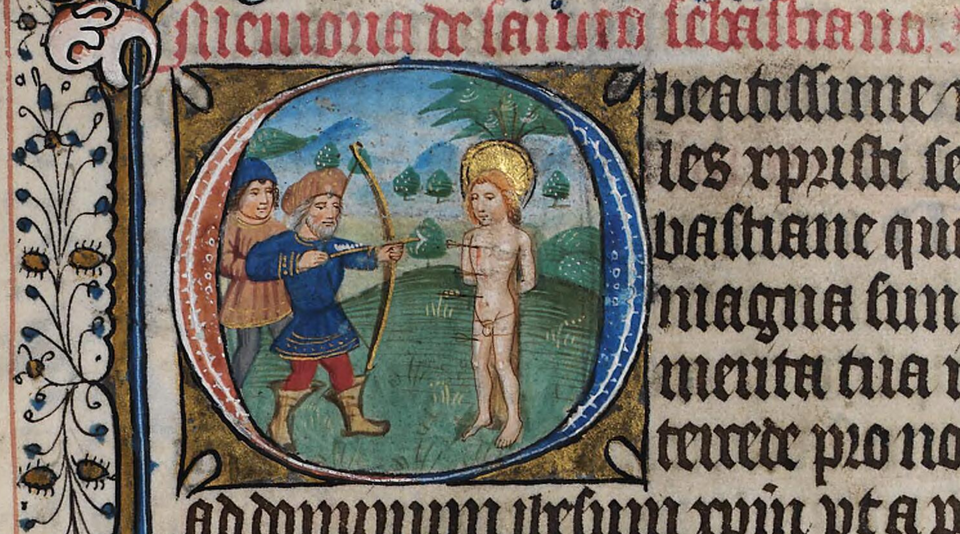
When he was finally discovered to be a Christian, in 286, he was handed over to the Mauretanian archers, who pierced him with arrows;
he was healed, however, by the widowed St. Irene.
Medal, from Catholic Encyclopedia, 1913
Plague medals
Struck and blessed as a protection against pestilence. The subjects are very various e.g., the figure of St. Sebastian and St. Roch, and different shrines of the Blessed Virgin, often also with a view of some particular city.
Works of art
Share this page