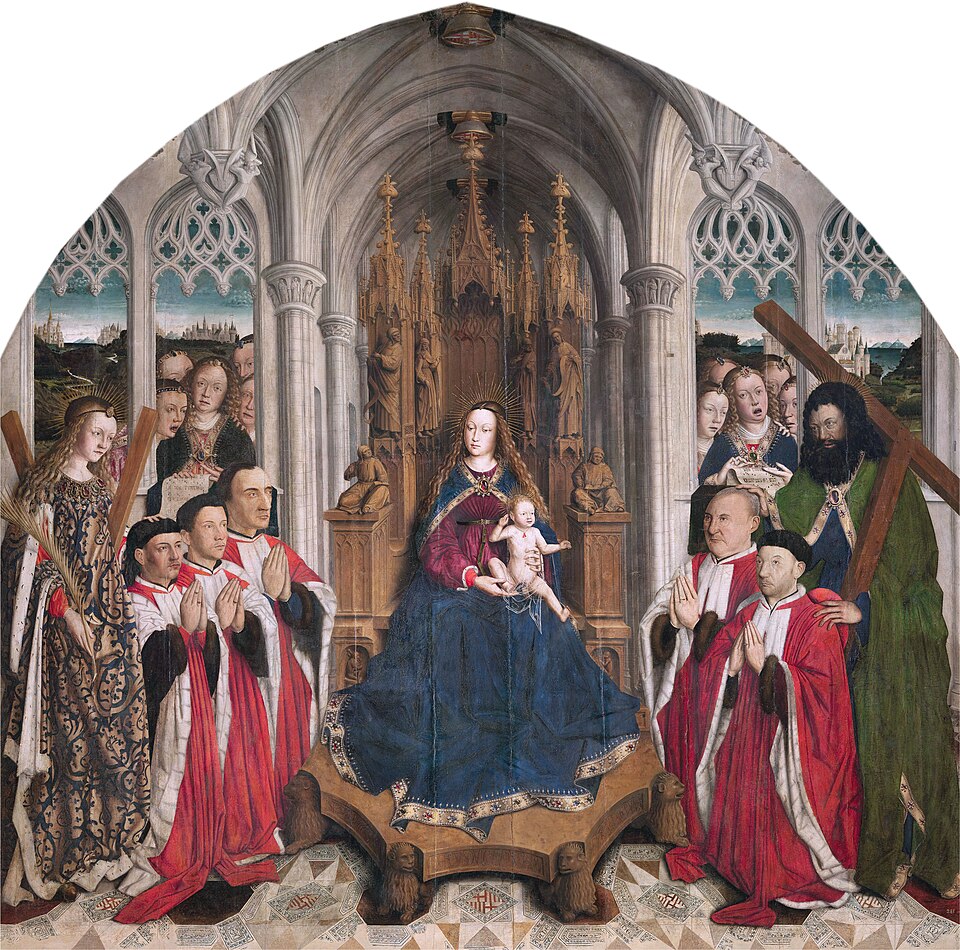
Eulalia of Barcelona
Eulalia of Barcelona , Saint , a Spanish martyr in the persecution of Diocletian (February 12, 304), patron of the cathedral and city of Barcelona, also of sailors.
From Catholic Encyclopedia, 1913, “St. Eulalia of Barcelona”
Patronages
According to Catholic tradition, as recorded in the sources cited for each patronage:
Barcelona
Eulalia of Barcelona , Saint , a Spanish martyr in the persecution of Diocletian (February 12, 304), patron of the cathedral and city of Barcelona, also of sailors.
Recorded as patron of Barcelona in:
- Catholic Encyclopedia, 1913, St. Eulalia of Barcelona
- Butler, Lives of the Saints, 1926, ST EULALIA OF BARCELONA, Virc. AND Marr.
- Husenbeth, Emblems of Saints, 1882, PATRONS OF COUNTRIES AND CITIES.
- Baring-Gould, The Lives of the Saints, 1897, S. EULALIA, V. M.
Drought
She is also invoked against drought.
Recorded as patron of drought in:
- Butler, Lives of the Saints, 1926, ST EULALIA OF BARCELONA, Virc. AND Marr.
Sailors
Eulalia of Barcelona , Saint , a Spanish martyr in the persecution of Diocletian (February 12, 304), patron of the cathedral and city of Barcelona, also of sailors.
Recorded as patron of sailors in:
- Catholic Encyclopedia, 1913, St. Eulalia of Barcelona
- Baring-Gould, The Lives of the Saints, 1897, S. EULALIA, V. M.
Also recorded as patron:
Feast day
- February 12 · Traditional date, Butler, Lives of the Saints, 1812
From Catholic Encyclopedia, 1913, “St. Eulalia of Barcelona”
The Acts of her life and martyrdom were copied early in the twelfth century, and with elegant conciseness, by the learned ecclesiastic Renallus Grammaticus (Bol. acad. hist., Madrid, 1902, XLI, 253-55).
Their chief historical source is a Latin hymn of the middle of the seventh century by Quiricus, Bishop of Barcelona, friend and correspondent of St. Ildephonsus of Toledo and of Tajo, Bishop of Saragossa.
This hymn, identical with that of Prudentius (Peristephanon, III) for the feast of St. Eulalia of Merida (December 10, 304), was preserved in the Visigothic Church and has reached us through the Mozarabic Liturgy.
There is no reason to doubt the existence of two distinct saints of this name, despite the over-hasty and hypercritical doubts of some.
Works of art