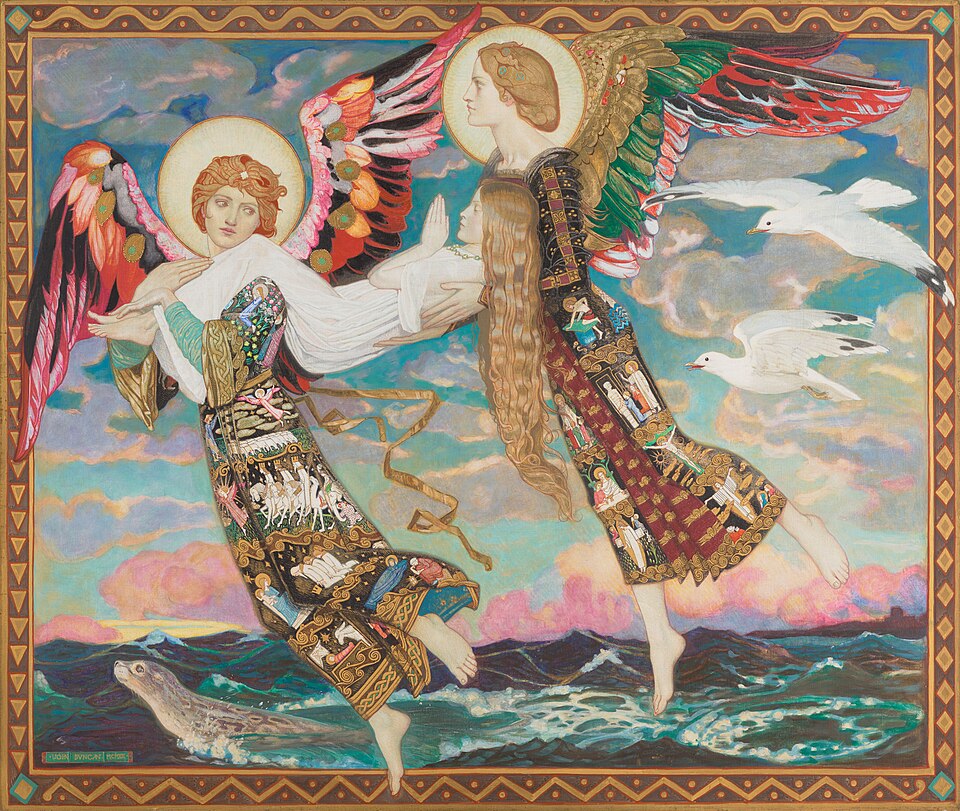
Brigid of Kildare
(Incorrectly known as BRIDGET).
Patronages
According to Catholic tradition, as recorded in the sources cited for each patronage:
Ireland
Even allowing for the exaggerated stories told of St. Brigid by her numerous biographers, it is certain that she ranks as one of the most remarkable Irishwomen of the fifth century and as the Patroness of Ireland.
Recorded as patron of Ireland in:
- Catholic Encyclopedia, 1913, St. Brigid of Ireland
- Butler, Lives of the Saints, 1812, ST. BRIDGIT, OR BRIDGET, V. AND BY CONTRACTION BRIDE ABBESS, AND PATRONESS OF IRELAND.
- Butler, Lives of the Saints, 1866, ST. BRIDGIT, OR BRIDGET, V. AND BY CONTRACTION, BRIDE, ABBESS, AND PATRONESS
- Baring-Gould, The Lives of the Saints, 1897, S. BRIDGET, V. ABSS.
Also recorded as patron:
Students
Not alone was St. Bridget a patroness of students, but she also founded a school of art, including metal work and illumination, over which St. Conleth presided.
Recorded as patron of students in:
Also recorded as patron:
Feast day
- February 1 · Traditional date, Catholic Encyclopedia, 1913
From Catholic Encyclopedia, 1913, “St. Brigid of Ireland”
Born in 451 or 452 of princely ancestors at Faughart, near Dundalk, County Louth;
d. 1 February, 525, at Kildare.
Refusing many good offers of marriage, she became a nun and received the veil from St. Macaille.
With seven other virgins she settled for a time at the foot of Croghan Hill, but removed thence to Druin Criadh, in the plains of Magh Life, where under a large oak tree she erected her subsequently famous Convent of Cill-Dara , that is, "the church of the oak" (now Kildare), in the present county of that name.
It is exceedingly difficult to reconcile the statements of St. Brigid's biographers, but the Third, Fourth, and Fifth Lives of the saint are at one in assigning her a slave mother in the court of her father Dubhthach, and Irish chieftain of Leinster.
Works of art