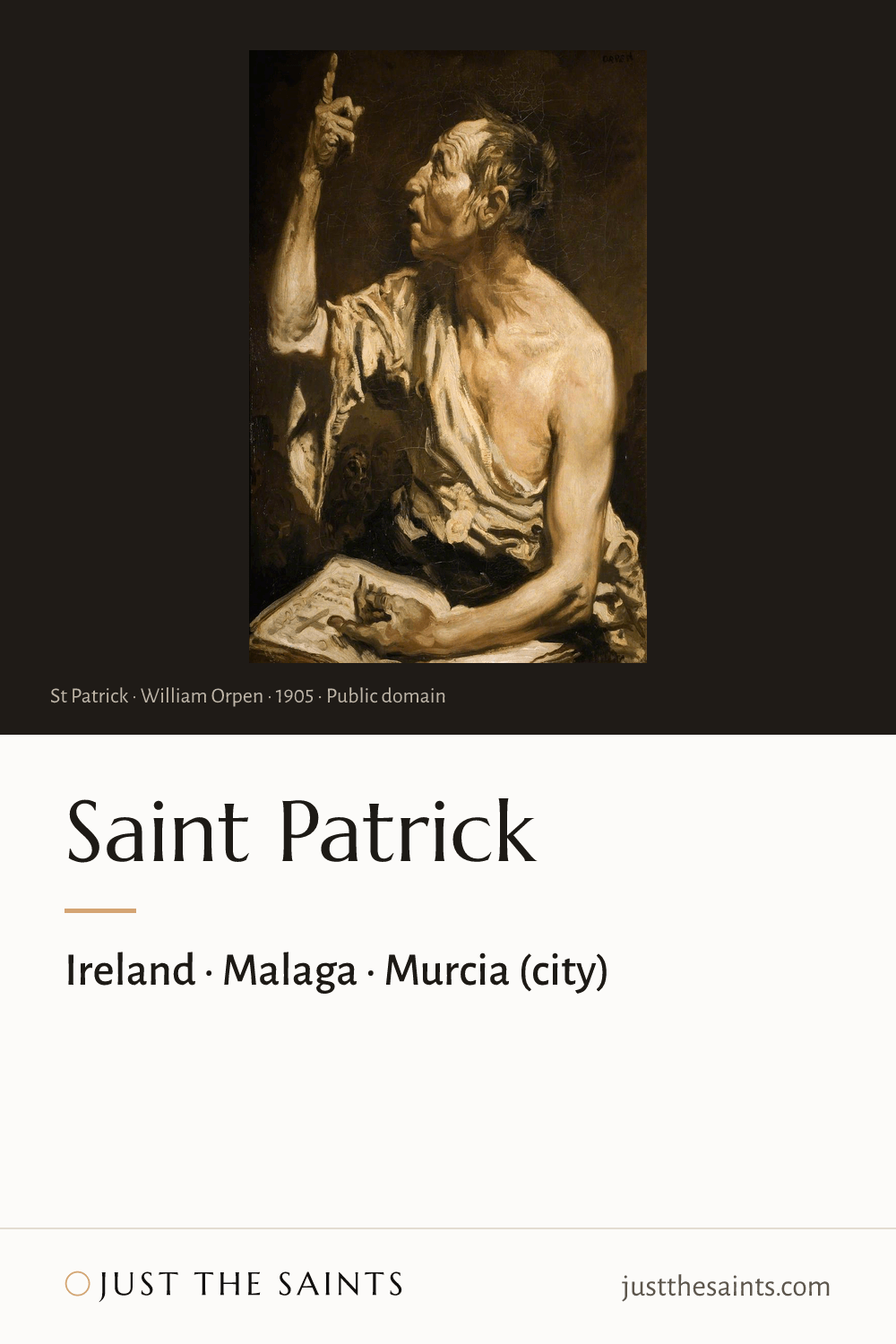
Saint Patrick
Updated
In our own words
In his sixteenth year Patrick was carried off into captivity by Irish marauders and sold as a slave in Dalriada, where for six years he tended his master's flocks. He then fled west and took ship; in a few days he was among his friends once more in Britain. He put himself under the guidance of St. Germain at Auxerre, at whose hands he was later promoted to the priesthood. It was probably in 433 that he and his companions landed close by Wicklow Head. In 444 Daire, the chieftain of the district, gave him a site for a church at Armagh. He died at Saul, in Downpatrick.
Apostle of Ireland, born at Kilpatrick, near Dumbarton, in Scotland, in the year 387;
Patronages on this page:
Patronages
According to Catholic tradition, as recorded in the sources cited for each patronage:
Ireland
Recorded as patron of Ireland in:
- Drake, Saints and Their Emblems, 1916, St. Patrick, Apostle and Patron Saint of Ireland
Also recorded as patron:
Malaga
Recorded as patron of Malaga in:
- Husenbeth, Emblems of Saints, 1882, PATRONS OF COUNTRIES AND CITIES.
Murcia (city)
Recorded as patron of Murcia (city) in:
- Husenbeth, Emblems of Saints, 1882, PATRONS OF COUNTRIES AND CITIES.
Feast day
- March 17 · General Roman Calendar
From Catholic Encyclopedia, 1913, “St. Patrick”
died at Saul, Downpatrick, Ireland, 17 March, 493.
He had for his parents Calphurnius and Conchessa.
The former belonged to a Roman family of high rank and held the office of decurio in Gaul or Britain.
Conchessa was a near relative of the great patron of Gaul, St. Martin of Tours.
Kilpatrick still retains many memorials of Saint Patrick, and frequent pilgrimages continued far into the Middle Ages to perpetuate there the fame of his sanctity and miracles.
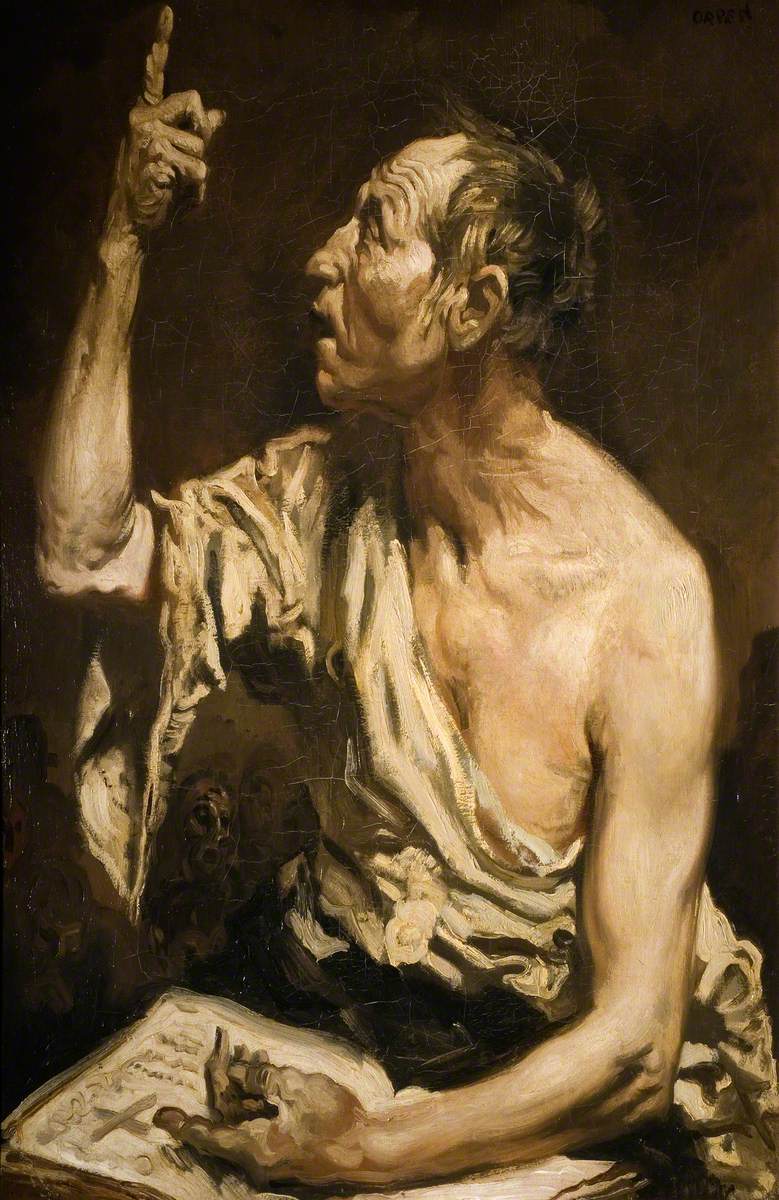
Works of art
Share this page